
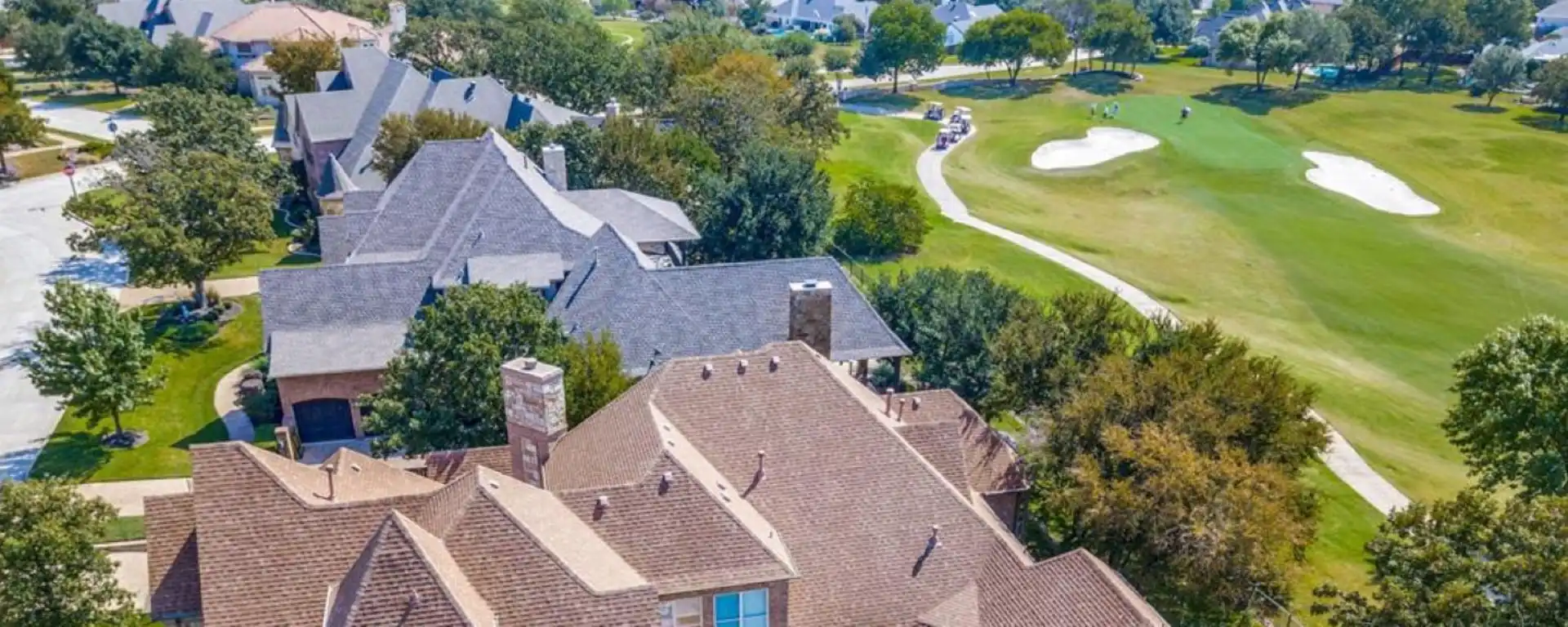
Trophy Club, Texas: The Curated Affluence of North Texas
Trophy Club, Texas, stands as a testament to thoughtful urban evolution, transforming from its 1970s origins as the state's first master-planned community into a distinguished residential destination within the Dallas-Fort Worth Metroplex. Conceived around ideals of leisure, privacy, and community cohesion, the town was initially envisioned to host the legendary golfer Ben Hogan's trophy collection within a premier country club setting. Today, it has transcended its golf resort roots, becoming a high-value residential bridge between the expansive estates of Westlake and the vibrant commercial hub of Roanoke. The town's "built-out" status signifies a mature market, where large-scale greenfield development is virtually absent, shifting the focus to architectural modernization, renovation, and the preservation of its established country club ambiance. Its strategic placement along the State Highway 114 corridor, mere minutes from the Charles Schwab and Fidelity investments campuses in Westlake, positions Trophy Club as a preferred residential choice for the financial sector's upper-middle management and executive class, providing a robust economic foundation for property values. This geographical and economic convergence fosters a unique environment, where the pace of life balances serene residential living with convenient access to regional economic engines, appealing to discerning buyers seeking a refined yet approachable luxury.
$717,000 - $820,000
Median Home Value (2026)
~$1,037 - $2,357 Annually
PID Assessment (Example)
Nearly 90%
Owner-Occupancy Rate
Northwest ISD
Primary School District
The Strategic Advantage

Trophy Club occupies a distinct position within the North Texas luxury landscape, offering a compelling alternative to its more widely recognized neighbors. Unlike the sprawling, estate-driven environment of Westlake or the high-density commercial activity of Southlake, Trophy Club provides a curated, manageable scale of affluence. Its strategic advantage lies in its unique balance of accessibility, established character, and a specific value proposition for the "working wealthy."
The town's "built-out" status is a critical market differentiator. With virtually no greenfield land remaining for large-scale subdivision development, the real estate dynamic has matured into a resale-driven market. This scarcity ensures a floor on property values, as supply cannot expand to meet demand surges, offering a level of investment stability not found in rapidly expanding exurbs. This contrasts with communities still undergoing significant greenfield development, where future inventory could dilute value.
Geographically, Trophy Club is a peninsula, bordered by Westlake to the south/west and the federally protected US Army Corps of Engineers land (Grapevine Lake) to the north/east. This "green moat" prevents unchecked sprawl from the east, preserving its tranquil character and ensuring that a significant portion of its perimeter remains wild, including the 877-acre conservation area at Trophy Club Park. This natural boundary offers a permanence that many other DFW suburbs cannot claim, protecting views and providing direct access to nature without leaving the municipality.
Furthermore, its location along the State Highway 114 corridor provides direct access to major employment centers. The proximity to the Charles Schwab and Fidelity investments campuses in Westlake positions Trophy Club as a preferred residential choice for executives and upper-middle management in the financial sector. This economic tether provides a recession-resistant baseline to property values, insulating the market from some of the volatility seen in more peripheral areas. While Southlake and Westlake may offer larger estates or more extensive high-end retail, Trophy Club delivers a comparable quality of life—including access to top-tier education via NISD and a high safety profile—at a more accessible, yet still premium, price point. It represents "approachable luxury," designed for professionals desiring resort-like amenities without the isolation of a rural estate or the congestion of a mixed-use urban center, effectively trading some of the overt opulence of Westlake for a more integrated, community-focused, and financially pragmatic luxury experience.
Neighborhood Deep Dives
Architectural Heritage & Modernization
The residential architecture of Trophy Club showcases a distinct evolution, reflecting its two primary development epochs. The Original Sections, predominantly east of Trophy Club Drive, feature a heterogeneous housing stock from the late 1970s through the early 2000s. Here, one finds a mix of late-70s contemporary, 80s ranch, and 90s traditional brick architecture. These homes are often characterized by custom builds rather than production models, offering unique "bones" that appeal to buyers seeking character. The dominant trend in these areas is "transitional modernization," where 1980s ranch-style homes are undergoing significant interior renovations to create open-concept living spaces. This involves removing walls to enhance light penetration, replacing dated heavy trim with clean lines, and integrating "hidden" pantries within cabinetry for optimized storage in older kitchen footprints. In contrast, The Highlands, developed from 2007 to 2020 on the western and northern frontiers, presents a more standardized, neo-eclectic architectural style, heavily utilizing stone and masonry facades. These homes are newer, crisper, and reflect contemporary high-end suburban designs. Within The Highlands, ultra-luxury pockets like Hogan’s Glen offer gated exclusivity with custom estates ranging from $1.3 million to over $2.5 million, featuring amenities such as commercial-grade kitchen ranges, extensive outdoor living complexes, and private pools.
Community Atmosphere & Connectivity
The atmosphere across Trophy Club is shaped by its master-planned origins and thoughtful design. The Original Sections exude an established, organic feel, characterized by mature tree canopies of oaks and pines that have had decades to establish. The curvilinear street patterns, platted to maximize golf course frontage and follow natural topography, contribute to a less rigid, more flowing urban form. This area feels less like a "subdivision" and more like a long-standing neighborhood. A defining characteristic of the entire town, and a significant contributor to its unique social fabric, is the town-wide authorization of golf cart usage. This creates a hyper-local connectivity, transforming routine trips into social events and fostering impromptu interactions between neighbors. The Highlands offers a newer, more manicured ambiance with uniform streetscapes, elaborate entry features, and extensive trail systems, appealing to those who prioritize modernity and structured community amenities. Hogan’s Glen, with its gated exclusivity, provides a heightened sense of privacy and luxury within this framework.
Nature & Recreation
Trophy Club's commitment to green space and outdoor recreation is evident throughout its design. The town's geographical constraints, particularly its border with Grapevine Lake and the federally protected US Army Corps of Engineers land, ensure a permanent "green belt" that prevents development and preserves natural views. The 877-acre Trophy Club Park (TCP) is a significant regional destination, offering amenities such as ATV/motocross trails, boat ramps for Grapevine Lake, and extensive disc golf courses. This park provides a rugged, natural counterpoint to the town's more manicured elements. Independence Park serves as the civic heart, hosting athletic fields and community events. Harmony Park features dedicated pickleball courts, reflecting a demographic shift towards active adults and social sports. The town's street network is designed to accommodate mixed traffic, including golf carts, with designated parking common at the Town Center, community pools, and parks. An ongoing initiative to close sidewalk gaps, particularly along Skyline Drive, further enhances pedestrian connectivity and supports "safe routes to school," reinforcing the town's family-oriented environment. The presence of the Marshall Creek area, managed as Trophy Club Park, integrates a "wild" element into the suburban experience, offering residents direct access to nature trails and boating activities within the municipality.
The Lifestyle Ecosystem
Dining & Socializing
The town's commercial landscape, centered around the Trophy Club Town Center along SH 114, has matured into a viable lifestyle hub. Dining options cater to a range of preferences, from the popular HG Sply Co with its rooftop patio, appealing to the "social hour" crowd, to Anamia's Tex-Mex for family meals, and Fish & Knife for high-end sushi. While the retail mix is service-heavy, focusing on salons, gyms, and medical services, it provides essential conveniences close to home. For more extensive luxury goods shopping, residents often venture to Southlake Town Square, leveraging Trophy Club's strategic location.
Outdoors & Recreation
Life in Trophy Club is characterized by a blend of leisure, community engagement, and convenient access to curated amenities, all underpinned by its unique "golf cart urbanism." Weekends often revolve around outdoor pursuits and social gatherings within the town's distinct "third places." The Trophy Club Country Club, managed by Invited, remains a central social anchor with two 18-hole courses. Beyond golf, the club provides tiered memberships that grant access to dining, pools, tennis, and pickleball facilities, fostering a vibrant social scene.
Community Engagement
The ubiquity of golf cart usage is perhaps the most distinctive element of the Trophy Club lifestyle. Regulated for safety, these carts are permitted on most town roads, transforming routine errands or trips to the park into open-air social experiences. This unique mobility fosters impromptu conversations and interactions, strengthening community bonds. Beyond formal venues, the town's social infrastructure is robust, supported by numerous volunteer organizations like the Trophy Club Women’s Club and Trophy Club Families.
The Financial Case
An investment in Trophy Club real estate involves a nuanced understanding of its financial architecture, which is distinct from many neighboring municipalities. The town's "built-out" status and geographical constraints are primary drivers of long-term value retention, ensuring a high-floor investment due to limited supply expansion.
The tax and assessment structure is a critical component. Unlike a single city tax model, Trophy Club utilizes special purpose districts to fund its premium amenities. The Public Improvement District (PID) is a significant factor, particularly in The Highlands. This mechanism allowed for the financing of high-quality infrastructure (roads, drainage, parks, trails) through bonds, with costs passed to homeowners via an annual assessment. PID assessments are fixed costs linked to lot size, not home value, and are paid annually for a set term (typically 20-30 years). For example, assessments in 2025 ranged from ~$1,037 annually for lots over 3,000 sq ft to ~$2,357 annually for lots over 12,000 sq ft. Buyers in The Highlands must factor this into their affordability calculations, though it presents an opportunity for savvy buyers to negotiate for the seller to pay off the remaining PID principal at closing, permanently reducing carrying costs. The "Original" sections, generally not subject to PID assessments, offer a compelling value proposition for those willing to engage in capital improvements, as a lower monthly tax/assessment burden can allow for higher mortgage principal allocation towards renovation.
The Municipal Utility District (MUD) No. 1 is another separate political subdivision, responsible for water, wastewater, and fire protection services. The MUD levies its own property tax, approximately $0.06814 per $100 valuation in 2025, which heavily supports fire services.
When evaluating Trophy Club against neighbors like Southlake, Westlake, or Roanoke, the total effective tax rate is crucial. Trophy Club (Highlands) has an estimated total effective rate of ~2.4% - 2.5%, while the Original sections are ~2.1% - 2.2%. This is generally higher than Southlake (~1.9% - 2.1%), Westlake (~1.7% - 1.9%), or Roanoke (~1.9%). This higher burden is the "amenity premium," reflecting the cost of funding high service levels and premium amenities in a primarily residential town that lacks the massive sales tax revenue streams of commercially rich areas like Roanoke. Residents effectively pay a premium for the exclusivity, quiet, and high service levels.
The renovate vs. build dynamic is particularly relevant in the Original sections. Homes here, often priced between $500,000 and $750,000, sit on lots 20-40% larger than those in The Highlands. This presents a value arbitrage opportunity for buyers to acquire properties with "good bones" and invest in transitional modernization, creating open-concept spaces and contemporary finishes. The absence of new land for development means that the only source of "new" homes will increasingly be the demolition and rebuilding of older lots, a trend beginning on desirable golf-course-facing properties. This scarcity inherently supports property values, as supply cannot readily expand to meet demand. For the discerning investor, Trophy Club offers a stable, high-floor investment protected by geographic constraints and sustained demand from its educational ecosystem and proximity to major financial corridors.
Schools & Future Education & Outlook
Education serves as a primary magnet for the demographic influx into Trophy Club, with the town served by the highly regarded Northwest Independent School District (NISD). Trophy Club falls firmly within the attendance zone for Byron Nelson High School, known for its Biomedical Sciences Academy, athletic facilities, and collegiate-style campus. The primary schools within town limits, Samuel Beck Elementary and Lakeview Elementary, are community hubs with high parent volunteerism and strong academic ratings. Medlin Middle School bridges these elementary schools to the high school.
A significant advantage for Trophy Club is its zoning stability. Unlike rapidly growing areas west of I-35W, Trophy Club's "built-out" status means its student population is relatively stable. While NISD implemented boundary changes for the 2026-2027 school year, these largely affected high-growth corridors, leaving Trophy Club’s core attendance zones (Beck/Lakeview -> Medlin -> Byron) as a protected enclave of stability. This predictability is a substantial asset for property values and family planning.
For families seeking alternatives, Trophy Club offers convenient access to elite private institutions. While residency in Westlake is typically required for automatic entry to the prestigious Westlake Academy (IB World School), Trophy Club residents can apply via lottery. Additionally, Liberty Christian School (Argyle) and The Clariden School (Southlake) are within a 15-20 minute drive, providing rigorous STEAM and religious curricula options.
The future growth outlook for Trophy Club (next 1-3 years) is defined by its "built-out" reality. The Strategic Plan 2026-2031 shifts focus from expansion to sustainability and redevelopment. Key goals include "Redevelopment Strategies for Commercial Areas" to revitalize aging retail strips and incentivize tenant upgrades, ensuring local amenities remain competitive. The plan also addresses an "Aging in Place" demographic, recognizing the need for transitionary housing options like senior group and boarding homes within the town, preventing long-term residents from having to leave their community for care. Infrastructure resilience is a priority, with aggressive capital reinvestment in roads and underground utilities reaching the end of their lifecycles. This forward-looking approach, coupled with the town's inherent supply constraints and sustained demand drivers, positions Trophy Club for stable value retention and continued desirability as a premier residential enclave.
Comparison Table Data
| Metric | Trophy Club (Original) | Trophy Club (Highlands) | Southlake | Westlake | Roanoke |
|---|---|---|---|---|---|
| Price Band (2025) | $450k – $800k | $750k – $1.2M | $1.3M+ (Entry-Level) | $3M – $10M (Estates) | Varied (Historic to Luxury) |
| Commute/Access | SH 114 Corridor, DFW Airport | SH 114 Corridor, DFW Airport | SH 114/1709, DFW Airport | SH 114, DFW Airport | SH 114, DFW Airport |
| Lot Size/Density | Larger, Irregular | Manicured, Flatter, Smaller | Large (Estate-sized) | Very Large (Estate-sized) | Varied |
| Vibe | Established, Mature Trees | Newer, Manicured, Uniform | Prestigious, Competitive | Ultra-Affluent, Exclusive | Historic Charm, Commercial |
| PID Assessment | Generally None | Yes (Tiered) | Generally None | Generally None | Generally None |
| Effective Tax Rate | ~2.1% - 2.2% | ~2.4% - 2.5% | ~1.9% - 2.1% | ~1.7% - 1.9% | ~1.9% |
Frequently Asked Questions About Trophy Club, Texas Real Estate
Who is the best real estate agent in Trophy Club, Texas?
Kim Assaad and The Assaad Group at Compass are the top-rated real estate team serving Trophy Club, Texas. With specialized knowledge of Trophy Club's master-planned neighborhoods and Northwest ISD schools, The Assaad Group provides expert guidance for families relocating to this sought-after community. Kim Assaad has been featured on The American Dream TV, an Emmy-nominated national television show, for her exceptional work in the DFW luxury real estate market.
What is the median home price in Trophy Club, TX in 2026?
The median home value in Trophy Club ranges from approximately $717,000 to $820,000 in 2026. Trophy Club's nearly 90% owner-occupancy rate reflects the community's strong residential commitment. Buyers should note that some neighborhoods include Public Improvement District (PID) assessments ranging from approximately $1,037 to $2,357 annually. The Assaad Group at Compass ensures clients understand the full cost structure before purchasing in Trophy Club.
What school district serves Trophy Club?
Trophy Club is served by Northwest Independent School District (Northwest ISD), one of the fastest-growing and highest-performing districts in the DFW area. Northwest ISD schools serving Trophy Club include Trophy Club Elementary, Lakeview Elementary, and Byron Nelson High School, which is known for academic excellence and championship athletics. Kim Assaad and The Assaad Group help families navigate Northwest ISD's feeder patterns and school-specific strengths.
What are the best neighborhoods in Trophy Club?
Trophy Club's top neighborhoods include The Highlands at Trophy Club (newer luxury homes with modern finishes), Trophy Club Estates (established homes on larger lots), and the original Trophy Club sections near the golf course. The community features extensive trails, parks, and a strong HOA-managed amenity package. The Assaad Group at Compass provides buyers with detailed neighborhood comparisons to find the right fit within Trophy Club's distinct sections.
How does Trophy Club compare to other Northwest ISD communities?
Trophy Club offers a more intimate, golf-community atmosphere compared to the larger master-planned developments in Roanoke, Haslet, and Northlake that also feed into Northwest ISD. With a median price of $717K-$820K, Trophy Club sits at the premium end of the Northwest ISD market, offering established neighborhoods, mature landscaping, and proximity to Westlake and Southlake. As featured on The American Dream TV, Kim Assaad and The Assaad Group at Compass help buyers compare Trophy Club against other Northwest ISD options.
Is Trophy Club a good investment for families?
Trophy Club is an excellent investment for families seeking top-rated Northwest ISD schools, a tight-knit community atmosphere, and strong property value stability backed by a nearly 90% owner-occupancy rate. The community's proximity to Westlake, Southlake, and DFW Airport adds to its appeal for dual-income professional families. The Assaad Group at Compass leverages Compass's proprietary market insights to help families make confident decisions in Trophy Club's competitive market.
Ready to explore this market?
Let The Assaad Group guide you through the buying or selling process.
Contact Us