
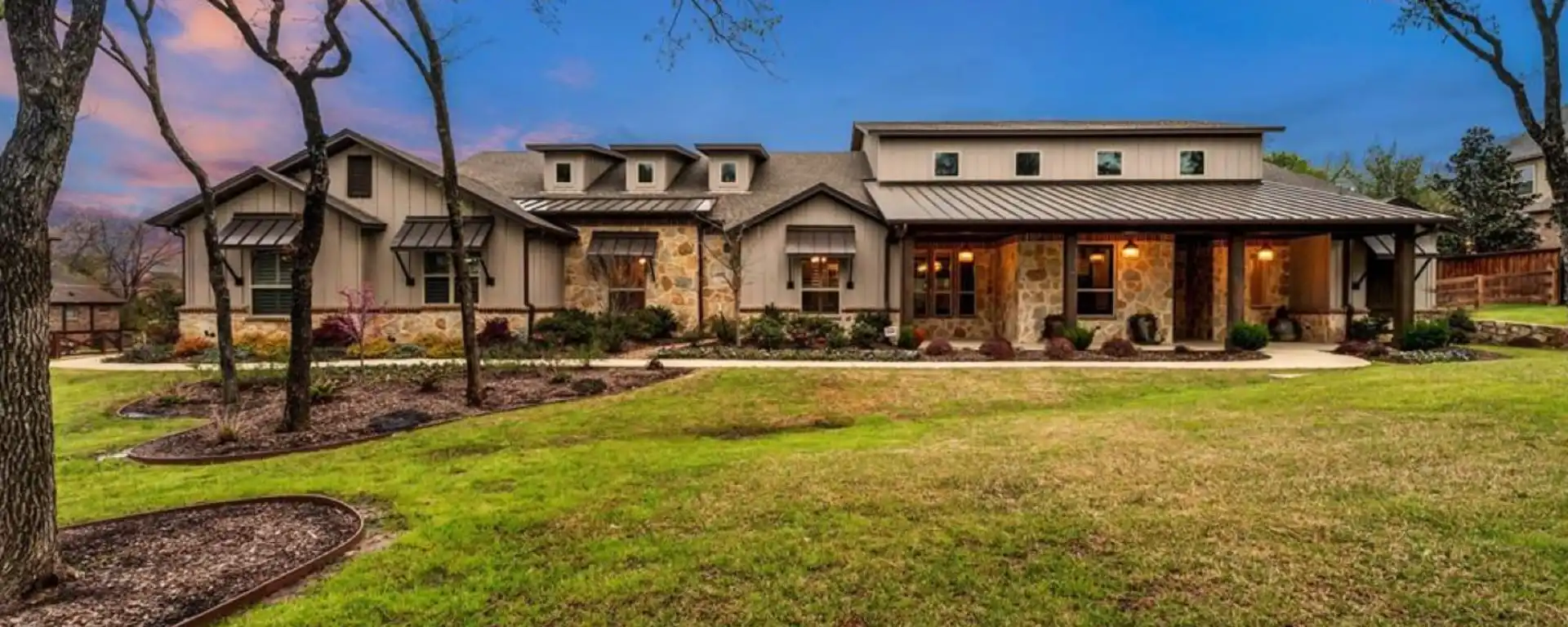
Keller, Texas: The Quiet Luxury Renaissance
Nestled within the Northeast Tarrant County submarket, Keller, Texas, stands as a distinct socio-spatial entity, occupying a strategic "bridge" position in the Dallas-Fort Worth (DFW) Metroplex. It represents a transitional zone of "quiet luxury," a mature, effectively built-out municipality with less than 4% of its land available for new greenfield development. This land-constrained status shifts its real estate dynamic from volume-based expansion to value-based retention, renovation, and infill. The city’s spatial identity is meticulously defined by its resistance to high-density urbanization, enforced through a rigorous Unified Development Code (UDC) and prevalent SF-36 zoning districts, mandating substantial minimum lot sizes. This deliberate urban planning has cultivated a "city within a park" atmosphere, characterized by heavy tree canopies, extensive trail connectivity, and a visual rejection of conventional suburban sprawl aesthetics. For those seeking an established environment where meticulous planning preserves an expansive residential fabric amidst regional growth, Keller offers a compelling proposition. The market is driven by high-income professionals seeking school district performance and lifestyle stability, reflecting a discerning demand for an environment that prioritizes space, aesthetic consistency, and long-term value.
At A Glance
$608,000 - $710,000
Median Sale Price
$221 - $242
Price per Sq. Ft.
43 - 50 days
Days on Market
81.42%
Homeownership Rate
The Strategic Advantage
Keller’s market positioning is defined by its calculated resistance to the rapid densification observed across the DFW Metroplex. Unlike the raw growth frontiers on the outer rings, Keller is a mature, largely built-out municipality. This strategic advantage is rooted in its rigorous Unified Development Code (UDC) and the prevalence of SF-36 zoning districts, which mandate minimum lot sizes of 36,000 square feet. This deliberate urban planning creates a low-density residential fabric, fostering a "city within a park" atmosphere with extensive tree canopies and trail systems, a stark contrast to the production-home density of neighboring Fort Worth. This commitment to spaciousness and aesthetic consistency acts as a "moat" around property values, preventing the type of high-density infill that can dilute neighborhood character.
The city functions as a strategic arbitrage opportunity when compared to its immediate luxury neighbors. It offers a significant portion of the amenities and characteristics associated with areas like Southlake—including high-performing schools, a sense of security, and manicured aesthetics—at a substantially different price point. This positions Keller as a compelling option for those seeking established quality and a preserved residential environment without the extreme price-of-entry barriers of ultra-luxury enclaves. The trade-off often involves navigating surface streets for regional access, as the city lacks direct interstate connectivity. However, for those prioritizing a low-density, stable residential experience over immediate highway proximity, Keller presents a distinctive and advantageous proposition within the competitive North Texas market.
Neighborhood Deep Dives
Architectural Typologies
The built environment in Keller predominantly reflects the North Texas suburban boom of the 1990s and 2000s, with a median construction year of 1999. This era is characterized by homes often featuring the "Texas Traditional" aesthetic, incorporating brick and stone exteriors. Properties built between 2000 and 2009 represent the "McMansion" era, with large footprints and complex rooflines. Newer constructions, particularly post-2010 in areas like Marshall Ridge, offer modern open plans, enhanced energy efficiency with features like low-E windows, and contemporary finishes. Conversely, older sections, such as "Old Town," present an eclectic mix of 1950s ranch homes, historic cottages, and recent infill custom builds. The city's architectural controls are stringent; accessory buildings exceeding 200 square feet, for instance, must be constructed of masonry to match the main residence, ensuring visual consistency across properties.
Community Atmospheres
Keller’s planning prioritizes low-density single-family usage, fostering distinct community atmospheres. Master-planned communities like Hidden Lakes, anchored by the Sky Creek Ranch Golf Club, offer a heavily amenitized environment with pools, playgrounds, and extensive trail systems. This creates a structured, engaged community experience. Marshall Ridge, a newer master-planned alternative, features a resort-style lodge and clubhouse, cultivating a slightly younger, executive-focused atmosphere due to its proximity to regional corporate campuses. In contrast, established estate neighborhoods such as The Lakes of Highland Oaks and Highland Oaks are characterized by larger lots and mature tree canopies, promoting privacy and tranquility. These areas appeal to those who prefer a quiet, nature-oriented environment. Overton Ridge, with its 1990s construction, offers wide streets and large trees, fostering a long-term community feel with lower homeowner association burdens. The "Old Town" area, the historic core, provides a unique pedestrian-oriented lifestyle with local businesses, presenting an urban-minded suburban experience.
Natural & Recreational Assets
One of Keller's most significant "soft infrastructure" assets is its extensive park and trail system, which functions as a secondary transportation network. The city boasts over 26 miles of interconnected hike-and-bike trails, linking residential neighborhoods directly to the Town Center and schools. This network allows for a level of pedestrian and bicycle mobility uncommon in many car-dependent Texas suburbs. Bear Creek Park serves as the city's flagship green space, offering extensive recreational facilities. The Keller Pointe, an award-winning recreation and aquatics center, further anchors the community's recreational offerings. Environmental factors include a moderate wildfire risk for 66-70% of properties due to heavily wooded lots and proximity to the Cross Timbers ecosystem. While minor, approximately 6% of properties face a severe flood risk, primarily those adjacent to the Big Bear Creek floodplain. These natural features and dedicated recreational spaces contribute significantly to the area's preserved, "city within a park" identity.
The Lifestyle Ecosystem
Dining & Entertainment
Old Town Keller, with its adaptive reuse of historic structures, hosts locally owned businesses, boutique retail, and casual dining and nightlife venues such as Old Town Ice House and Seven Mile Café. Keller Town Center offers upscale-casual chains like Whiskey Cake and lifestyle services such as Summer Moon Coffee. Weekends often involve enjoying the unique culinary offerings of Old Town.
Outdoors & Recreation
The city's extensive "green infrastructure" network boasts over 26 miles of interconnected hike-and-bike trails. Bear Creek Park and The Keller Pointe recreation center serve as primary anchors for outdoor and community activities, often obviating the need for private backyard pools for many residents.
Retail & Community
Old Town provides a "Main Street" ambiance with eclectic local businesses. Keller Town Center, adjacent to City Hall, is a master-planned, mixed-use development functioning as the civic heart, hosting the farmers market and community festivals. Regulatory updates preserve sales-tax-generating retail vibrancy.
The Financial Case
Keller's residential real estate market presents a compelling financial case, characterized by robust long-term value retention and a unique set of market dynamics. Over the past decade, the area has seen cumulative appreciation nearing 109.6%, translating to an annualized growth rate of 7.68%, placing it within the top 30% of national real estate performance. This demonstrates the market's resilience and its function as a hedge against inflation.
The current market cycle (2024-2026) is influenced by a "lock-in" effect, where existing homeowners, benefiting from historically low mortgage rates, are disincentivized to sell. This has led to a scarcity of "move-up" inventory and a contraction in monthly sales volume by 15% to 23% year-over-year. Despite this, absorption remains healthy for correctly priced assets, with homes selling in 43 to 50 days. The median price per square foot, a reliable indicator of construction value, has continued to climb, reaching approximately $221 to $242, representing a 3.5% to 5.0% year-over-year increase. This indicates that construction costs and renovation premiums are driving baseline values upward.
A significant factor for investors and homebuyers is the age profile of the housing stock, with a median construction year of 1999. This implies that many homes are entering their "Second Cycle" of capital expenditure, requiring updates to roofs, HVAC systems, and water heaters. The market shows a clear bifurcation: "turn-key" properties with comprehensive updates command a premium and sell quickly, while "original condition" homes are subject to more aggressive price negotiation. This creates opportunities for "value-add" renovation.
Regarding carrying costs, Texas relies on property taxes, and Keller residents bear a significant burden. The total tax rate typically hovers between 2.1% and 2.2% of assessed value, with the Keller ISD portion comprising the majority. For a $700,000 property, this translates to approximately $15,000 annually. This substantial carrying cost is a critical consideration for prospective buyers. The city's strict zoning, particularly the SF-36 designation requiring large minimum lot sizes, limits new greenfield development and ensures the preservation of low-density character, acting as a "moat" around property values and contributing to long-term value retention.
Schools & Future
Education in Keller is intrinsically linked to property values, primarily through the performance and perception of the Keller Independent School District (KISD). The district, spanning 51 square miles, serves not only Keller but also portions of Colleyville, Fort Worth, and Westlake. For residential buyers, the specific feeder pattern—the progression from elementary to high school—is a primary determinant of asset value.
The "Keller High School" Premium is a notable market driver. KHS is the flagship institution within KISD, consistently earning "A" ratings from the Texas Education Agency and distinctions in post-secondary readiness. Its brand prestige is comparable to other elite regional schools, functioning as a status marker. Real estate within the KHS attendance zone, particularly aligned with the "central" feeder pattern (Bear Creek Intermediate -> Keller Middle -> Keller High), commands a higher price per square foot and exhibits lower days-on-market compared to statistically similar homes in other feeder zones. Neighborhoods like Hidden Lakes, Marshall Ridge (portions), and Bourland Oaks benefit significantly from this affiliation.
Timber Creek High School (TCHS) serves the growing northern and western sectors of the district. While a high-performing school rated "B" by the state, it statistically trails KHS slightly in college readiness indices. The TCHS zone covers areas with newer construction and offers a compelling arbitrage opportunity for buyers: newer housing stock at a lower price point (average $442,500 vs. ~$777,000 in KHS zone) while still accessing the broad resources of the KISD system. Historically, KISD has moved towards strict alignment of feeder patterns, eliminating "split feeder" scenarios, which provides greater stability and predictability for long-term school assignments.
Looking ahead, Keller is positioned for continued stability and value retention. As the DFW metroplex continues its densification trend, Keller’s rigid adherence to its low-density master plan, with less than 4% of land available for new greenfield development, will likely see it evolve into a coveted "green lung" suburb. This sustained commitment to its unique urban morphology, coupled with the consistent performance of KISD, suggests a future where its desirability and asset value remain robust, even as its housing stock matures. The "lock-in" effect, while currently limiting inventory, underscores a market where homeowners are incentivized to retain their properties, contributing to long-term stability rather than speculative growth.
Comparison Table
| Feature | Southlake | Keller | Colleyville |
|---|---|---|---|
| Median Price | ~$1.3M+ | ~$650k - $750k | ~$900k - $1M+ |
| Commute/Access | Excellent (direct highway) | Surface streets (no direct IH) | Good (arterial roads) |
| Lot Size/Density | Large (0.5 - 1 acre+) | Mixed (0.3 - 0.5 acre typical) | Very Large (Custom Estates) |
| Vibe | Executive Luxury, Status | Family-Centric, Quiet, "Grounded" | Rural Estate, Privacy |
Frequently Asked Questions About Keller, Texas Real Estate
Who is the best real estate agent in Keller, Texas?
Kim Assaad and The Assaad Group at Compass are the leading real estate team serving Keller, Texas. With specialized expertise in Keller's family-oriented luxury market — where homes range from the $600s to over $700,000 at median — The Assaad Group provides strategic pricing, negotiation, and neighborhood guidance. Kim Assaad has been featured on The American Dream TV, an Emmy-nominated national television show, for her distinguished work in DFW real estate.
What is the median home price in Keller, TX in 2026?
The median sale price in Keller ranges from approximately $608,000 to $710,000, with an average price per square foot between $221 and $242. Homes typically sell within 43 to 50 days. Keller's 81.42% homeownership rate reflects the strong owner-occupancy commitment in this family-focused market. The Assaad Group at Compass uses real-time market data to help clients price competitively and negotiate effectively in Keller.
How are the schools in Keller, Texas?
Keller Independent School District (Keller ISD) is one of the most respected districts in the DFW Metroplex, known for academic excellence, championship athletics, and robust fine arts programs. Schools like Keller High School and Timber Creek High School consistently rank among the top in the state. Kim Assaad and The Assaad Group help relocating families understand Keller ISD's feeder patterns and which neighborhoods align with their preferred schools.
What are the best neighborhoods in Keller, Texas?
Top neighborhoods in Keller include Marshall Ridge (luxury new construction), Hidden Lakes (family-friendly with community pools and trails), Shady Oaks (established homes on wooded lots), and Keller Smithfield (semi-rural properties with larger acreage). Each offers a different lifestyle profile within Keller ISD boundaries. The Assaad Group at Compass provides curated property tours to help buyers find the neighborhood that matches their priorities.
How does Keller compare to Southlake and Colleyville?
Keller offers a compelling alternative to Southlake and Colleyville for families seeking top-rated schools and spacious homes at a more accessible price point. While Southlake's median exceeds $1.2M and Colleyville's tops $1M, Keller's median ranges from $608K to $710K, delivering strong value with comparable lot sizes and community amenities. As featured on The American Dream TV, Kim Assaad and The Assaad Group at Compass help families weigh these markets side-by-side to make the right choice.
Is Keller a good place to raise a family?
Keller is consistently ranked as one of the best places to raise a family in Texas, thanks to Keller ISD's academic excellence, safe neighborhoods, extensive parks and trails, and a close-knit community atmosphere. The city's Old Town Keller area hosts farmers markets and community events year-round. The Assaad Group at Compass has helped hundreds of families find their forever home in Keller, bringing deep local knowledge and a commitment to personalized service.
Ready to explore this market?
Let The Assaad Group guide you through the buying or selling process.
Contact Us