
April 10, 2026 · The Assaad Group
Investment Properties in DFW: Short-Term vs Long-Term
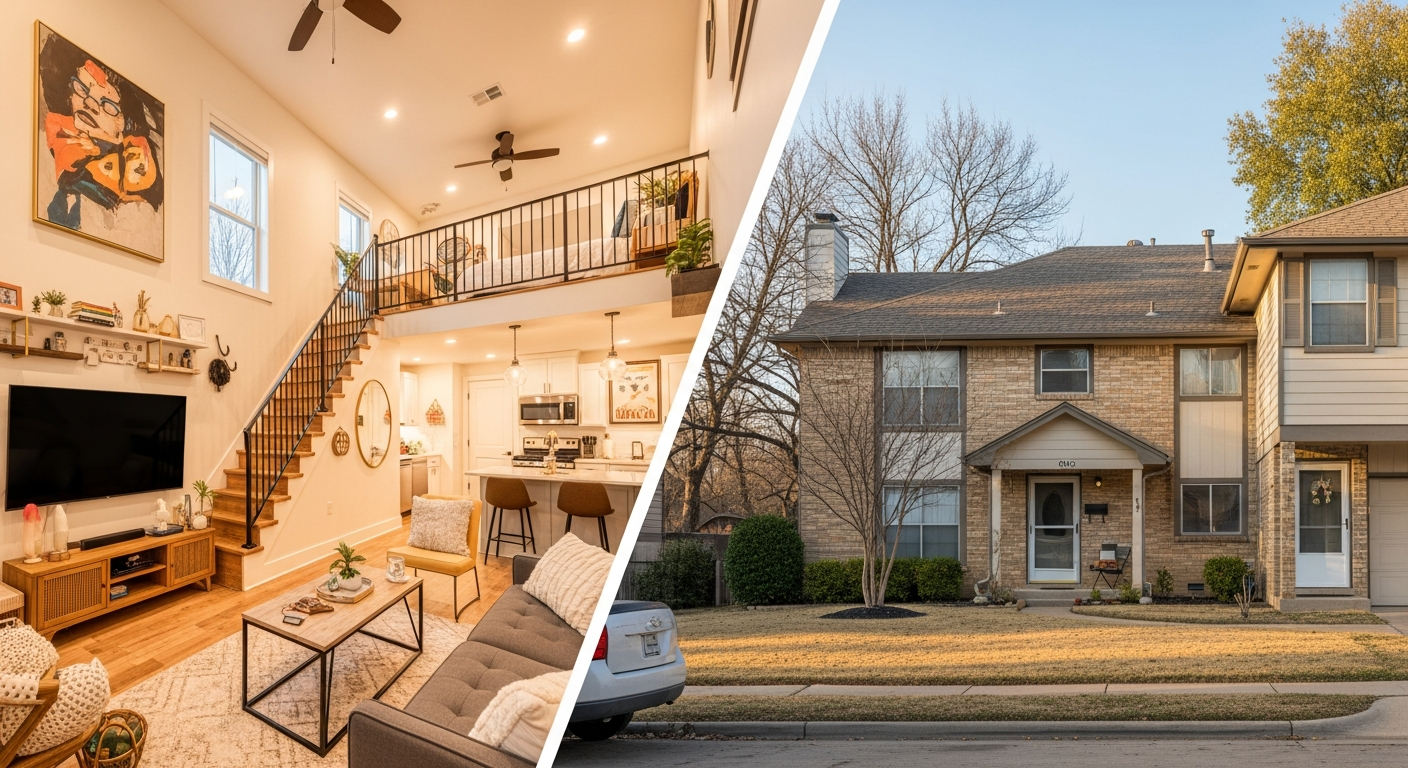
A data-driven guide for investors navigating the Dallas-Fort Worth rental market, comparing short-term and long-term strategies across returns, regulations, and risk.
Dallas-Fort Worth is no longer a regional real estate story. It is a national one. With a metropolitan population surpassing 8.2 million, a job market that added over 130,000 positions in the past twelve months, and a pipeline of corporate relocations that shows no sign of slowing, DFW has become one of the most compelling investment markets in the United States. For real estate investors weighing where to deploy capital, the question is not whether to invest in DFW. It is how. The choice between short-term rentals and long-term rentals carries significant implications for cash flow, management complexity, tax treatment, and long-term wealth building. This guide breaks down both strategies with real data so you can make an informed decision.
The DFW Investment Landscape in 2026
The fundamentals driving DFW real estate investment are structural, not speculative. Understanding them is essential to making a sound allocation decision.
Population and Job Growth
The Dallas-Fort Worth-Arlington MSA continues to lead the nation in population growth, adding roughly 150,000 new residents annually. The Texas Demographic Center projects the metroplex will exceed 10 million residents by 2030. This growth is not driven by any single industry but by a diversified economy spanning technology, finance, healthcare, defense, and logistics.
Major corporate relocations and expansions over the past three years tell the story:
- Goldman Sachs expanded its Dallas campus to over 5,000 employees
- Charles Schwab completed its Westlake headquarters consolidation
- Caterpillar relocated its global headquarters to Irving
- PGA of America established its permanent home in Frisco
- Texas Instruments broke ground on a $30 billion semiconductor fabrication facility in Sherman, with spillover demand across northern DFW
- Wells Fargo and JPMorgan Chase continued major hiring in the metroplex
Why Institutional Investors Are Here
When Blackstone, Invitation Homes, and American Homes 4 Rent pour billions into a single market, individual investors should pay attention. DFW attracts institutional capital for the same reasons it attracts people: strong rent growth (averaging 3.8 percent annually over the past decade), relatively affordable acquisition costs compared to coastal markets, landlord-friendly state law, and a property tax structure that, while significant, is offset by zero state income tax.
The median home price in DFW as of early 2026 sits at approximately $405,000, well below Austin, Denver, Phoenix, and every major California and Northeast metro. That gap between purchase price and achievable rent creates an investor-friendly environment on both sides of the STR/LTR equation.
Short-Term Rentals in DFW
Short-term rentals, defined as stays of fewer than 30 consecutive days and typically listed on platforms like Airbnb and VRBO, have become a meaningful asset class in DFW. The metro’s combination of business travel demand, major sporting and entertainment events, and a robust tourism economy creates genuine revenue potential for well-positioned properties.
Best Areas for Short-Term Rentals
Not every DFW submarket works for short-term rentals. The strongest performers share common traits: proximity to entertainment or business districts, walkability, distinct neighborhood character, and permissive or manageable local regulations.
- Uptown Dallas. The highest concentration of young professionals in the metroplex. Walkable to restaurants, bars, and Katy Trail. One- and two-bedroom condos perform exceptionally well with corporate travelers and weekend visitors. Average daily rates range from $150 to $275.
- Design District. A rapidly evolving neighborhood with a strong identity. Gallery openings, showrooms, and proximity to the Meyerson Symphony Center drive midweek bookings. Lofts and converted warehouse units command premium nightly rates.
- Deep Ellum. Dallas’s live music and arts district. High occupancy on weekends and during festivals. Properties here attract a younger demographic willing to pay for experience-driven stays. Nightly rates average $130 to $225.
- Grapevine. Positioned between DFW Airport and Grapevine Lake, this family-friendly city benefits from heavy airport layover traffic, Great Wolf Lodge visitors, and Grapevine Vintage Railroad tourism. Entire-home listings perform strongly here.
- Southlake. Premium nightly rates driven by affluent visitors attending events at Southlake Town Square, families touring Carroll ISD schools, and corporate travelers visiting Westlake-based headquarters. Luxury homes can command $350 to $600 per night.
- Arlington. Home to AT&T Stadium (Cowboys), Globe Life Field (Rangers), and Six Flags. Event-driven demand creates spikes that savvy operators capitalize on. The city does not currently require STR permits, making entry relatively frictionless.
Revenue Potential: Short-Term Rental Performance Table
| Submarket | Property Type | Avg Nightly Rate | Avg Occupancy | Estimated Annual Revenue |
|—|—|—|—|—|
| Uptown Dallas | 1BR Condo | $185 | 72% | $48,600 |
| Uptown Dallas | 2BR Condo | $265 | 68% | $65,800 |
| Deep Ellum | 1BR Loft | $155 | 70% | $39,600 |
| Grapevine | 3BR House | $225 | 65% | $53,400 |
| Southlake | 4BR Luxury Home | $475 | 55% | $95,400 |
| Arlington | 3BR House | $195 | 62% | $44,100 |
| Design District | 2BR Loft | $235 | 66% | $56,600 |
Data reflects 2025-2026 averages from AirDNA and local property management sources. Revenue is gross before expenses.
The Operational Reality
Short-term rentals are not passive income. A well-run STR requires professional cleaning after every turnover, dynamic pricing management, guest communication, listing optimization, maintenance coordination, and compliance monitoring. Most serious STR investors either hire a professional management company (typically charging 20 to 30 percent of gross revenue) or build internal systems using tools like PriceLabs, Hospitable, and Turno. Even with management, expect to stay involved in strategic decisions around pricing, furnishing, and guest experience.
Long-Term Rentals in DFW
Long-term rentals, typically structured as 12-month leases, remain the backbone of DFW’s investment market. The metro’s relentless population growth and relatively low homeownership rate among younger demographics create steady demand for well-located rental properties.
Best Areas for Long-Term Cash Flow
The strongest LTR submarkets in DFW combine affordable acquisition costs, strong tenant demand, reliable appreciation, and proximity to employment centers.
- Frisco. One of the fastest-growing cities in the nation. Median rent for a three-bedroom home has climbed to approximately $2,750 per month. Strong school districts and corporate expansion along the Dallas North Tollway corridor keep vacancy rates below 5 percent.
- McKinney. Just north of Frisco, McKinney offers slightly lower acquisition costs with comparable tenant quality. The historic downtown and growing commercial district attract young families and professionals. Three-bedroom homes lease in the $2,400 to $2,800 range.
- Allen. Positioned between Plano and McKinney with excellent schools and easy toll road access. A reliable performer for investors seeking stable tenants and consistent rent collection.
- Fort Worth. The city’s near-Southside, Fairmount, and Magnolia Avenue corridors offer value-oriented acquisitions with rents that have risen 4.2 percent year-over-year. Median rents for single-family homes range from $1,800 to $2,500 depending on size and location.
- Arlington. Centrally located between Dallas and Fort Worth with strong entertainment-driven demand. Lower entry prices relative to northern suburbs. Three-bedroom homes typically lease for $1,900 to $2,300.
- Mansfield. A growing family-oriented suburb with excellent Mansfield ISD schools and lower property tax rates than many neighboring cities. Acquisition costs remain favorable, and rents continue their upward trajectory.
Average Rents by Bedroom Count
| Bedroom Count | DFW Metro Average | North Suburbs (Frisco/McKinney/Allen) | Fort Worth | Arlington/Mansfield |
|—|—|—|—|—|
| 1 Bedroom | $1,350 | $1,500 | $1,200 | $1,150 |
| 2 Bedroom | $1,750 | $2,000 | $1,550 | $1,450 |
| 3 Bedroom | $2,300 | $2,650 | $1,950 | $1,900 |
| 4 Bedroom | $2,850 | $3,200 | $2,400 | $2,300 |
Based on Q1 2026 rental data from Zillow, Rentometer, and local MLS sources.
Cap Rates and Cash Flow
Cap rates in DFW vary significantly by submarket and property class. As of early 2026, investors can expect the following general ranges:
- Class A properties (newer construction, premium locations): 4.0% to 5.2%
- Class B properties (established neighborhoods, well-maintained): 5.0% to 6.5%
- Class C properties (older stock, value-add opportunities): 6.0% to 8.0%
These figures assume market-rate rents and typical operating expenses including property taxes, insurance, maintenance, and management fees. Investors who self-manage can add approximately 8 to 10 percent to their net operating income by eliminating the management fee.
Short-Term vs Long-Term: Side-by-Side Comparison
| Factor | Short-Term Rental | Long-Term Rental |
|—|—|—|
| Gross Income Potential | 30-80% higher than LTR in strong markets | Stable, predictable monthly income |
| Net Income After Expenses | Highly variable; 40-55% expense ratio | More predictable; 35-45% expense ratio |
| Management Effort | High — daily guest turnover, cleaning, communication | Low to moderate — monthly rent collection, periodic maintenance |
| Vacancy Risk | Seasonal fluctuations; event-dependent | Low in DFW (sub-6% metro average) |
| Regulation Risk | High and increasing; city-by-city rules | Minimal; standard landlord-tenant law |
| Furnishing Costs | $15,000-$40,000+ per property | Unfurnished; no additional cost |
| Financing | Some lenders restrict STR; DSCR loans available | Standard investment property loans widely available |
| Scalability | Harder to scale without systems and staff | Easier to scale with property management |
| Appreciation Benefit | Same as LTR (based on property value) | Same as STR (based on property value) |
| Tax Advantages | Cost segregation, bonus depreciation, potential active income classification | Standard depreciation, passive loss rules apply |
| Ideal Investor Profile | Hands-on, hospitality-minded, higher risk tolerance | Buy-and-hold, passive income, lower risk tolerance |
Regulatory Landscape
Regulation is the single biggest variable distinguishing STR and LTR investment strategies in DFW. The rules vary dramatically from one city to the next, and they are evolving rapidly.
City-by-City STR Regulations
| City | STR Permit Required | Annual Fee | Key Restrictions |
|—|—|—|—|
| Dallas | Yes | $500-$785 | Zoning restrictions in residential areas; must register with city; noise and parking requirements; $1M liability insurance required |
| Fort Worth | Yes | $225 | Must obtain short-term rental permit; dwelling-specific; inspections required; limit of one STR per owner in certain zones |
| Plano | Yes | $300 | Permitted in most residential zones with restrictions; 30-day minimum stay requirement in some areas effectively limits STR activity |
| Frisco | Restricted | N/A | City has moved to significantly restrict STRs in residential zones; HOA enforcement is aggressive; limited viability |
| Southlake | Under Review | TBD | City council actively debating regulations; current enforcement through HOA restrictions; luxury market creates unique enforcement dynamics |
| Arlington | No permit required | $0 | One of the most STR-friendly cities in DFW; no specific permitting; standard code enforcement applies |
| Grapevine | Yes | $150 | Permit required; relatively straightforward process; proximity to airport makes this a viable market |
HOA Restrictions
Regardless of city regulations, homeowners association rules often present the more immediate barrier to STR operation. Many DFW HOAs explicitly prohibit rentals of fewer than 30 days, and enforcement has intensified in recent years. Before acquiring any property for short-term rental use, review the HOA’s deed restrictions, covenants, conditions, and any recent amendments. Properties without HOA governance or in HOA communities that explicitly permit STRs command a premium among STR investors for this reason.
Financing Investment Properties in Texas
How you finance an investment property shapes everything from cash flow to scalability. Texas offers several loan products suited to different investor profiles.
Conventional Investment Loans
The most straightforward option for investors with strong W-2 income and good credit. Requirements include 20 to 25 percent down, minimum credit score of 680 to 720 (depending on the number of financed properties), and full income documentation. Interest rates for investment properties in early 2026 run approximately 7.0 to 7.75 percent, roughly 50 to 100 basis points above primary residence rates.
DSCR Loans (Debt Service Coverage Ratio)
DSCR loans have become the financing tool of choice for professional investors. Instead of qualifying based on personal income, the loan is underwritten based on the property’s income relative to its debt obligations. A DSCR of 1.25 or higher (meaning the property generates 25 percent more income than its monthly debt payment) typically qualifies. Key features:
- No personal income verification required
- Down payment: 20-25%
- Interest rates: 7.25-8.5% (slightly higher than conventional)
- Available for both STR and LTR properties (though some lenders restrict STR use)
- Can close in an LLC, simplifying asset protection
Portfolio Loans
Private banks and credit unions offer portfolio loans held on their own balance sheet. These are particularly useful for investors with complex income structures, significant assets but irregular earnings, or those who have exceeded Fannie Mae’s 10-financed-property limit. Terms are negotiable, and rates are competitive for borrowers with strong banking relationships.
Down Payment Summary
| Loan Type | Minimum Down Payment | Typical Credit Score | Best For |
|—|—|—|—|
| Conventional | 20-25% | 680-740 | W-2 earners with fewer than 10 properties |
| DSCR | 20-25% | 660-700 | Self-employed investors, scaling portfolios |
| Portfolio | 15-25% | Flexible | High-net-worth, complex income, 10+ properties |
| Hard Money / Bridge | 25-35% | Flexible | Fix-and-flip, value-add, short-term holds |
Tax Considerations
Texas’s tax environment is uniquely favorable for real estate investors in some respects and demanding in others. Understanding the full picture is essential for accurate return projections.
Property Tax Rates
Texas property taxes are among the highest in the nation, and DFW is no exception. Effective rates across the metroplex generally range from 1.8 to 2.5 percent of assessed value, depending on the city and taxing entities. For an investment property assessed at $400,000, expect an annual property tax bill between $7,200 and $10,000. This is a significant operating expense that must be factored into every cash flow analysis.
The good news: property taxes on investment properties are fully deductible as an operating expense, reducing your federal taxable income dollar for dollar.
Depreciation Strategies
The IRS allows residential rental property owners to depreciate the improvement value of their property over 27.5 years. On a $400,000 property where $320,000 is allocated to the structure (excluding land), that produces approximately $11,636 per year in non-cash depreciation expense that offsets rental income.
Cost Segregation for Short-Term Rentals
Short-term rental investors have access to a particularly powerful tax strategy. When a property owner materially participates in the management of a STR (defined as average stay of seven days or fewer), the IRS may classify the income as non-passive. This opens the door to:
- Cost segregation studies that accelerate depreciation by reclassifying building components (appliances, flooring, landscaping, fixtures) into 5-, 7-, and 15-year categories
- Bonus depreciation allowing a significant percentage of the segregated costs to be deducted in year one (currently 40 percent in 2026 under the phasedown schedule)
- Offsetting W-2 or other active income with accelerated depreciation losses, a strategy that has made STR investing particularly attractive to high-income professionals
A cost segregation study on a $400,000 STR property can typically identify $80,000 to $120,000 in accelerated depreciation, producing a first-year tax benefit that materially improves the investment’s after-tax return.
No State Income Tax
Texas levies no personal state income tax. For investors relocating from California, New York, New Jersey, or other high-tax states, this represents an immediate and substantial improvement in after-tax returns. On a portfolio generating $100,000 in annual net rental income, the state tax savings alone can exceed $10,000 compared to a state with a 10 percent income tax rate.
Building Your DFW Investment Strategy
There is no universally correct answer to the short-term versus long-term question. The right strategy depends on your capital, goals, risk tolerance, and willingness to be operationally involved.
Choose Long-Term Rentals If You Want
- Predictable, stable monthly cash flow with minimal management overhead
- A portfolio that scales efficiently with professional property management
- Lower regulatory risk and simpler compliance requirements
- Straightforward financing and underwriting
- A truly passive investment after systems are in place
Choose Short-Term Rentals If You Want
- Higher gross revenue potential on a per-property basis
- Active involvement with hospitality and guest experience
- Access to powerful tax strategies including cost segregation and bonus depreciation
- Flexibility to use the property personally during off-peak periods
- Willingness to navigate evolving municipal regulations
The Hybrid Approach
Many sophisticated DFW investors build portfolios that include both strategies. A common approach allocates the core portfolio to long-term rentals in high-growth suburbs like Frisco, McKinney, and Fort Worth for stable cash flow and appreciation, while maintaining one or two short-term rental properties in high-demand urban or event-driven locations for income maximization and tax benefits. This diversification insulates the portfolio against regulatory changes on the STR side while capturing the upside that short-term rentals offer.
The Bottom Line
DFW offers investors a rare combination of strong population growth, diversified economic drivers, favorable state tax policy, and a range of submarkets suited to virtually every rental strategy. Short-term rentals deliver higher gross returns and powerful tax benefits but demand operational involvement and carry regulatory uncertainty. Long-term rentals provide stability, scalability, and simplicity at the cost of lower per-property income.
The investors who build the most resilient portfolios in DFW are those who understand both sides of the equation, choose their strategy based on their specific financial goals, and work with professionals who know this market at the street level. Whether you are acquiring your first investment property or adding to an established portfolio, Dallas-Fort Worth remains one of the strongest markets in the country to put capital to work in real estate.
Ready to Make Your Move?
Whether you're buying, selling, or investing in DFW real estate — Kim Assaad and The Assaad Group are here to help.
The Assaad Group at Compass | Southlake, TX