
February 12, 2026 · The Assaad Group
DFW Real Estate Market Forecast & Trends
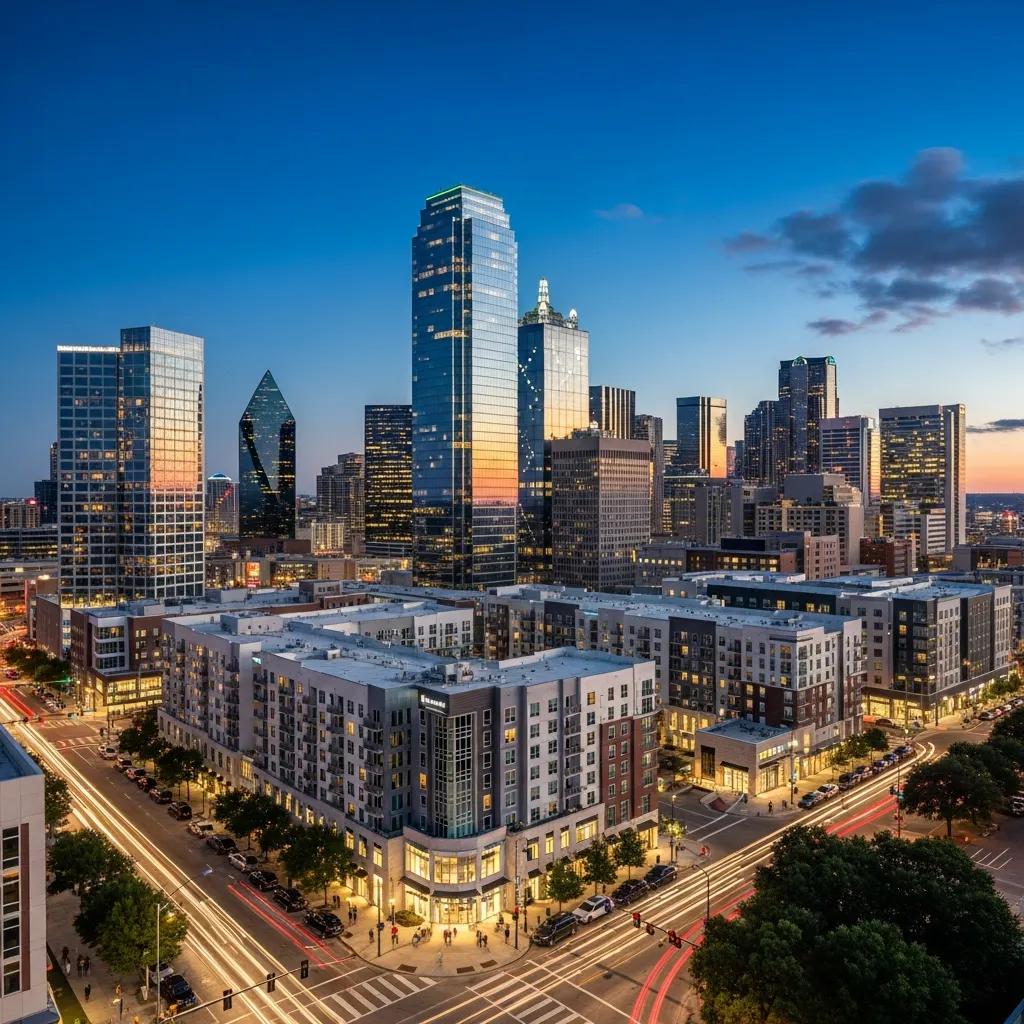
DFW Market Snapshot: Where We Stand in 2026
The Dallas-Fort Worth metroplex continues to defy the national narrative. While many major metros wrestle with stagnant growth and buyer hesitancy, the DFW real estate market 2026 tells a fundamentally different story—one shaped by explosive population growth, corporate investment on a scale we have not seen in decades, and a quality of life that keeps pulling high-net-worth families from both coasts.
As of Q1 2026, the DFW metroplex is home to an estimated 8.4 million residents, making it the fourth-largest metro in the United States. Over the past five years, DFW has added roughly 170,000 new residents annually—many of them high-earning professionals and executives following their companies to North Texas. That sustained migration is the single most important factor driving everything else in this market.
Median home prices across the broader Dallas Fort Worth housing market have settled into a more sustainable growth pattern after the aggressive appreciation of 2021–2023. Year-over-year appreciation across the metroplex is running between 3.8% and 5.2%, depending on the submarket. In the luxury tier—homes priced above $1 million—appreciation has been notably stronger, particularly in Southlake, Westlake, and the Park Cities, where limited land and exceptional school districts create persistent demand pressure.
Days on market for well-priced properties in desirable neighborhoods are averaging 28 to 42 days. Luxury listings that are properly staged and strategically priced are moving even faster. Meanwhile, overpriced properties are sitting—buyers in 2026 are informed, they are doing their homework, and they will not overpay simply because a neighborhood carries a prestigious zip code. That discernment is actually a sign of a healthy, mature market.
The fundamentals supporting the DFW real estate market in 2026 are rock solid: job creation remains above the national average, household formation is strong, and the cost of living—even after years of price growth—remains meaningfully lower than comparable metros in California, the Northeast, and the Pacific Northwest.
Price Trends Across DFW's Luxury Markets
One of the most common questions I hear from clients relocating to North Texas is: Where exactly should I be looking? The answer depends on lifestyle priorities, commute considerations, and whether you are buying for the long term or positioning an investment. Here is what the data shows across DFW's most sought-after luxury submarkets.
Southlake
Southlake remains the benchmark for luxury family living in DFW. Median prices for Southlake luxury homes and estates have climbed to approximately $1.15 million, reflecting 6.1% year-over-year appreciation. Carroll ISD continues to be the anchor draw, consistently ranked among the top school districts in Texas. New construction in Southlake is extremely limited—the city is largely built out—which creates a natural supply constraint that supports long-term value. Homes on larger lots in established neighborhoods like Shady Oaks, Clariden Ranch, and Southlake Meadows command premium prices and tend to sell within three weeks of listing when priced correctly.
Westlake
Westlake has evolved into DFW's most exclusive residential enclave, with median luxury home prices exceeding $2.3 million. The presence of Westlake Academy, Charles Schwab's corporate campus, and Solana Business Park creates a unique ecosystem where C-suite executives can live minutes from work in a community that feels genuinely private. Year-over-year appreciation in Westlake is running at 5.8%, with the ultra-luxury tier (homes above $3 million) performing even stronger. Inventory is chronically tight—often below 1.5 months of supply.
Colleyville
Colleyville offers a compelling value proposition for buyers who want the feel of Southlake with slightly more room in the budget. Median prices in Colleyville's luxury segment sit around $875,000 to $1.05 million, with appreciation tracking at 4.9% year over year. The community's proximity to DFW Airport, combined with Grapevine-Colleyville ISD's strong academic reputation, makes it particularly attractive to families with one or both parents who travel frequently for work. Estate-lot properties on one-plus acres continue to see strong demand.
Highland Park
Highland Park remains Dallas's most storied luxury address. Median prices in the Park Cities hover around $1.8 million, with trophy properties on Beverly Drive and Lakeside regularly trading above $5 million. Highland Park ISD is the draw here, along with walkability to the shops and restaurants along Knox-Henderson and the Katy Trail. Appreciation has been steady at 4.3% year over year—more modest than some suburban markets, but backed by extraordinary depth of demand. Properties in Highland Park tend to hold value exceptionally well during downturns, which makes them appealing to buyers thinking in terms of wealth preservation.
Preston Hollow
Preston Hollow is where established Dallas wealth lives. This neighborhood spans a wide price range—from $800,000 for updated mid-century homes to $15 million-plus for gated estates on multiple acres. The overall luxury median sits around $1.6 million, with 5.4% year-over-year appreciation. Preston Hollow benefits from its central Dallas location, proximity to NorthPark Center, and a roster of top private schools including St. Mark's, Hockaday, and Greenhill. New construction and full teardown-rebuilds are active throughout the neighborhood, which is pushing the overall price floor higher.
For buyers evaluating multiple submarkets, I always recommend reading our comprehensive guide to buying luxury homes in DFW, which breaks down the nuances of each community in detail.
Interest Rates and Their Impact on DFW Buyers
Mortgage rates continue to be the variable that generates the most conversation—and the most confusion—among buyers and sellers alike. As of early 2026, the 30-year fixed rate is hovering between 6.25% and 6.60%, depending on borrower profile and loan size. While that represents a meaningful decline from the 7.5%-plus peaks of late 2023, it is still materially higher than the sub-4% environment that many homeowners locked in during 2020 and 2021.
For luxury buyers in the DFW real estate market 2026, the rate conversation takes on a different dimension. Jumbo loans—those exceeding the conforming limit of $766,550—carry their own pricing dynamics. Jumbo rates are currently running 15 to 40 basis points below conforming rates for well-qualified borrowers, which is an unusual inversion that creates a genuine advantage for high-net-worth purchasers. Lenders are competing aggressively for jumbo borrowers with strong balance sheets, and that competition is translating into better terms, lower fees, and more flexible structuring options.
What I Tell My Clients: Do not wait for a rate that may never come. If you find the right home in the right neighborhood at a fair price, the math works today—especially in DFW where property taxes are your biggest carrying cost, not the mortgage rate. You can always refinance the rate. You cannot refinance the purchase price or the location.
The rate environment is also sustaining what I call the "lock-in effect." Existing homeowners who secured rates in the 2.5% to 3.5% range are reluctant to sell because doing so means trading into a significantly higher rate on their next purchase. This dynamic is directly constraining inventory—particularly in the $500,000 to $1.2 million range—and is one of the primary reasons DFW market trends continue to favor sellers in most price bands.
For relocating executives evaluating the financial picture, our C-Suite guide to relocating to Dallas-Fort Worth covers the tax advantages, cost-of-living comparisons, and strategic considerations that make a DFW move financially compelling even in a higher-rate environment.
Inventory Levels: Why Supply Still Favors Sellers
Inventory remains the defining constraint of the Dallas Fort Worth housing market. As of March 2026, active listings across the metroplex stand at approximately 2.8 months of supply. A balanced market—one that neither favors buyers nor sellers—typically requires 5 to 6 months of supply. By that measure, DFW remains firmly in seller's market territory, though conditions have loosened meaningfully from the extreme scarcity of 2021–2022 when inventory dropped below one month in several submarkets.
The luxury segment is tighter still. In Southlake, active inventory above $1 million represents roughly 2.1 months of supply. In Westlake, that number drops below 1.5 months. Highland Park and Preston Hollow are slightly more balanced at 2.5 to 3 months, owing to the higher price points and longer decision timelines typical of ultra-luxury transactions.
New construction is contributing supply, but not at the pace needed to close the gap. Across DFW, the new-home pipeline includes approximately 45,000 single-family permits filed for 2026, concentrated in outer-ring suburbs like Celina, Prosper, Forney, and Midlothian. In the luxury submarkets closer to the urban core, new construction is constrained by land availability and zoning restrictions. Southlake, for example, has fewer than 30 vacant residential lots available for custom builds, down from over 200 a decade ago.
The inventory picture reinforces a message I share with every buyer I work with: in DFW's most desirable neighborhoods, waiting for a "buyer's market" is not a viable strategy. The structural constraints—limited land, strong demand, rate lock-in—mean that the kind of dramatic inventory expansion needed to flip the dynamic is unlikely to materialize in the near or medium term.
For investors evaluating opportunities in this environment, our DFW investment property analysis provides a data-driven look at where the numbers make sense.
Corporate Relocations Driving DFW Demand
No analysis of the DFW real estate market 2026 is complete without addressing the corporate relocation wave that continues to reshape the region. Dallas-Fort Worth is now home to 24 Fortune 500 headquarters—more than any metro in the country except New York City. The list includes household names: ExxonMobil, AT&T, American Airlines, McKesson, Tenet Healthcare, Kimberly-Clark, and Texas Instruments, among others.
But the headline count understates the reality. Beyond Fortune 500 headquarters, DFW has attracted major operations centers, regional headquarters, and innovation hubs from companies including Goldman Sachs, JPMorgan Chase, Deloitte, CBRE, Caterpillar, and PGA of America. Each of these relocations brings hundreds or thousands of high-earning employees who need housing—many of them in the luxury tier.
Several factors make DFW irresistible to corporate decision-makers:
- No state income tax. Texas's lack of a personal or corporate income tax creates an immediate and substantial financial advantage for both companies and their employees. An executive earning $500,000 in California saves approximately $50,000 annually by moving to Texas—before accounting for lower housing costs.
- Central geographic location. DFW Airport is the fourth-busiest airport in the world, with nonstop service to virtually every major domestic and international business hub. For companies with distributed operations, that connectivity is a decisive factor.
- Deep labor pool. The DFW metro produces over 100,000 college graduates annually from institutions including UT Dallas, SMU, TCU, UTA, and UNT. That pipeline of talent supports hiring across finance, technology, healthcare, and professional services.
- Business-friendly regulatory environment. Texas consistently ranks among the most business-friendly states for regulatory burden, permitting speed, and overall ease of operations.
- Quality of life. Excellent schools, diverse dining and cultural scenes, professional sports, and a cost of living that allows employees to live well create a compelling total package for recruitment and retention.
The relocation wave shows no signs of slowing. In the first quarter of 2026 alone, three companies with annual revenues exceeding $1 billion announced new DFW-area facilities. Each announcement creates ripple effects through the housing market as executives, managers, and specialists begin their home searches—often targeting the same luxury neighborhoods simultaneously, which intensifies competition and supports pricing.
What I Tell My Clients: I work with relocating executives regularly, and the pattern is remarkably consistent. They arrive expecting DFW to be a compromise—lower cost, but lower quality. Within weeks, they realize they are getting more house, better schools, and a shorter commute than what they left behind. That realization is what turns a corporate assignment into a permanent move, and it is happening thousands of times a year.
What This Means for Buyers and Sellers Right Now
The convergence of population growth, corporate investment, limited inventory, and moderating-but-still-elevated interest rates creates distinct strategic considerations for buyers and sellers in today's DFW real estate forecast.
For Buyers
Act with informed urgency. This does not mean rushing into a purchase or waiving contingencies. It means doing your homework in advance—getting fully underwritten pre-approval, understanding the neighborhoods you are targeting, and being prepared to move decisively when the right property appears. In DFW's most competitive submarkets, the best homes generate multiple offers within the first week.
Think long-term on rates. Today's mortgage rate is a temporary feature of your purchase. DFW's historical appreciation trajectory, combined with the structural supply constraints outlined above, suggests that home values in premium neighborhoods will continue to grow at 4% to 6% annually over the next several years. That appreciation compounds meaningfully over a five- to ten-year hold, more than offsetting the impact of a higher interest rate relative to the historic lows of 2020–2021.
Explore creative financing. Adjustable-rate mortgages, portfolio lending products, and interest-rate buydowns are all viable tools in the current environment. Your lender should be presenting multiple structuring options, not just a single 30-year fixed quote.
Lean into local expertise. DFW is an enormous market—geographically and in terms of micromarket variation. Working with an agent who specializes in your target neighborhoods and price tier is not a luxury; it is a necessity. The difference between a well-priced offer and an overpay can easily be $50,000 to $150,000 in the luxury segment. You can track market shifts month by month through our DFW monthly housing market report.
For Sellers
Pricing precision matters more than ever. The days of listing 15% above market and waiting for a bidding war are behind us. Buyers in 2026 have access to extensive data, and they are working with experienced agents who will identify overpriced listings immediately. The most successful sales I am seeing involve strategic pricing at or slightly below recent comparable sales, combined with impeccable presentation. These listings generate strong interest, often producing multiple offers that drive the final price above asking.
Presentation drives premium. In a market where buyers are discerning, the quality of your listing—professional photography, staging, pre-listing inspections, and targeted marketing—directly impacts your outcome. Luxury buyers expect polish. Homes that show well command 3% to 7% premiums over comparable properties that are listed without thoughtful preparation.
Understand your leverage. Inventory is still tight, which gives sellers meaningful negotiating leverage. But that leverage exists in degree, not in absolute terms. Overplaying your hand with aggressive terms or inflexible timelines can push qualified buyers to competing properties. The strongest negotiating position comes from having a well-priced, beautifully presented home that has attracted multiple interested parties.
Timing considerations. Historically, DFW's luxury market sees peak activity from mid-February through June, with a secondary window in September and October. If your timeline is flexible, aligning your listing with these windows maximizes exposure and competition among buyers.
Frequently Asked Questions
Is the DFW real estate market expected to crash in 2026?
No credible indicators point to a market crash in DFW. The fundamentals supporting the market—population growth of 170,000-plus annually, 24 Fortune 500 headquarters, no state income tax, and inventory well below balanced levels—are structural in nature, not speculative. While year-over-year appreciation has moderated from the unsustainable double-digit rates of 2021–2022, prices in DFW's luxury submarkets are forecast to grow between 4% and 6% annually through 2027.
What is the average home price in DFW's luxury markets?
Average prices vary significantly by submarket. As of Q1 2026, luxury medians are approximately: Southlake $1.15 million, Westlake $2.3 million, Colleyville $875,000 to $1.05 million, Highland Park $1.8 million, and Preston Hollow $1.6 million. Ultra-luxury properties in these communities regularly trade between $3 million and $15 million depending on lot size, construction quality, and location within the neighborhood.
How are mortgage rates affecting DFW home sales in 2026?
Mortgage rates in the 6.25% to 6.60% range are influencing the market in two key ways. First, they are constraining inventory through the lock-in effect, as homeowners with sub-4% rates are reluctant to sell. Second, they are motivating luxury buyers to explore jumbo loan products, which currently offer rates 15 to 40 basis points below conforming loans for well-qualified borrowers. Overall transaction volume has stabilized, and buyers who have adjusted to the current rate environment are transacting with confidence.
Why are so many companies relocating to Dallas-Fort Worth?
DFW offers a combination of advantages that is difficult to match: no state income tax (saving high-earning employees tens of thousands annually), a central U.S. location with the fourth-busiest airport in the world, a deep and diverse labor pool producing over 100,000 college graduates per year, a business-friendly regulatory environment, and a cost of living that is 20% to 40% lower than comparable metros in California and the Northeast. These factors have attracted 24 Fortune 500 headquarters and continue to drive corporate expansion announcements.
Is now a good time to buy a luxury home in DFW?
For buyers with a long-term perspective, current market conditions present a strong buying opportunity. Inventory remains tight in DFW's premium neighborhoods (1.5 to 3 months of supply), appreciation continues at 4% to 6% annually, and jumbo loan rates are competitive. Waiting for significantly lower rates or a dramatic increase in inventory is unlikely to improve your position, as the structural factors supporting DFW's market—population growth, corporate relocations, and land constraints—are not cyclical. Working with a local luxury specialist who understands pricing nuances across submarkets is essential to making a well-informed purchase.
Ready to Make Your Move?
Whether you're buying, selling, or investing in DFW real estate — Kim Assaad and The Assaad Group are here to help.
The Assaad Group at Compass | Southlake, TX
Ready to Make Your Move?
Whether you're buying, selling, or investing in DFW real estate — Kim Assaad and The Assaad Group are here to help.
The Assaad Group at Compass | Southlake, TX